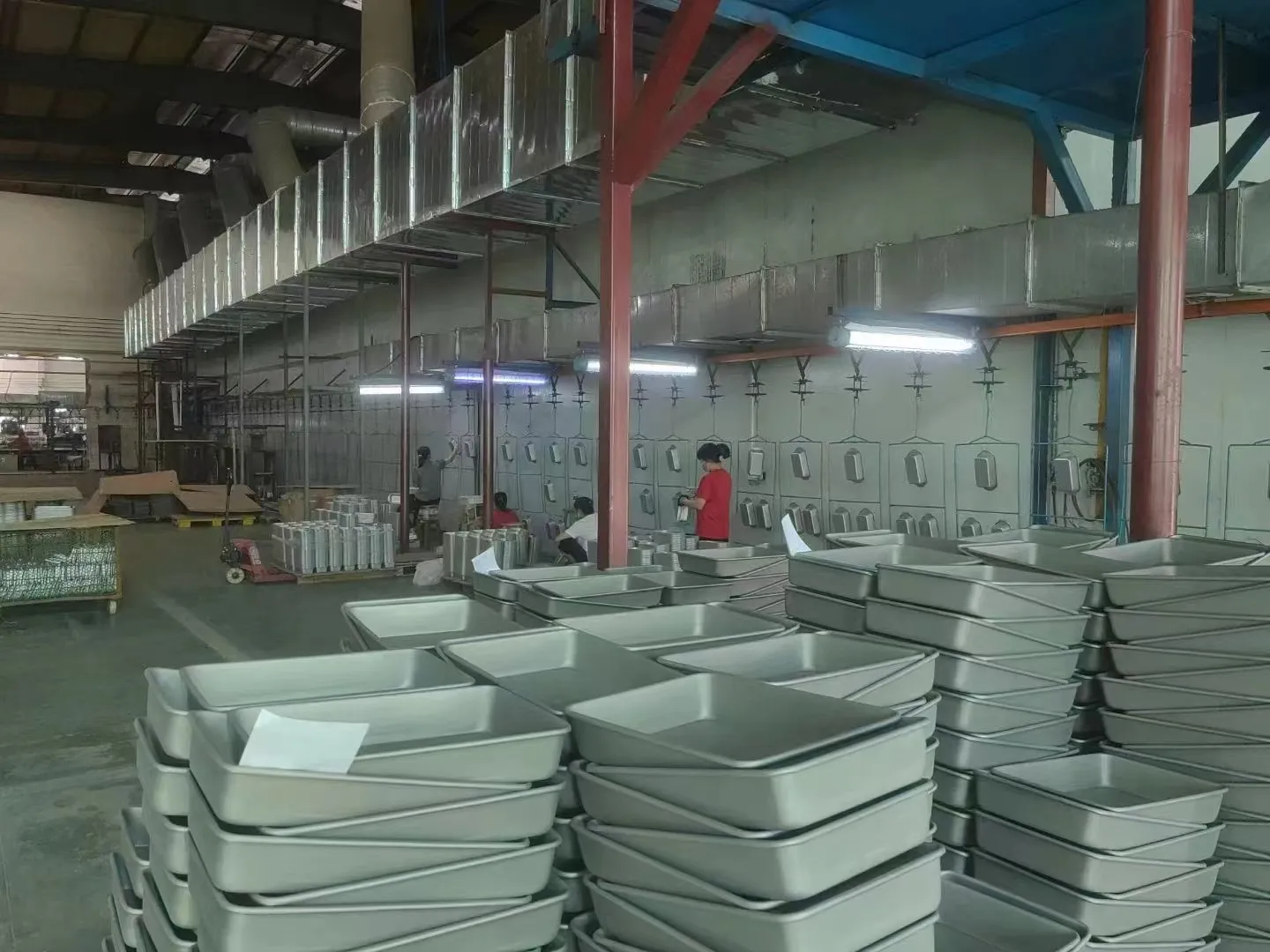

Ask three bakeware suppliers to quote “a fluoropolymer non-stick coating” and you will usually receive three prices that cannot be compared — not because one supplier is dishonest, but because each one silently priced a different job. One assumed a single-coat system at a thin film build; another priced a reinforced two-coat system; a third left the cure verification out entirely. A fluoropolymer coating quotation is only meaningful when the request behind it fixes the variables that drive coating cost and performance. This article sets out those variables — the coating system, dry film thickness, substrate, cure and test standards — and gives you a specification checklist you can attach to any coating RFQ.
Why fluoropolymer coating quotes for the same pan can differ so widely
Fluoropolymer coatings — PTFE-based non-stick systems — are not a single commodity with a single price per pan. The applied cost of a coating programme depends on how much coating material is laid down, how many application and curing passes the system needs, how the substrate must be prepared, and how the finished film is verified. When an RFQ leaves those points open, each supplier fills the gaps with their own default assumptions, and the cheapest quote is often simply the one that assumed the least coating.
This is why experienced buyers treat a coating quotation as a priced specification, not a price for a colour. The seven inputs below are the ones that most change the number — and the product you eventually receive.
The seven inputs that determine a fluoropolymer coating quotation
1. Coating system: one-coat, two-coat or reinforced
Fluoropolymer non-stick systems are built in layers. A one-coat system applies a single combined layer; a two-coat system separates a primer from a topcoat; premium and reinforced systems add a midcoat, often with ceramic or metallic reinforcement for abrasion resistance. Each additional layer means more material, another spray pass and another cure cycle — so the system architecture is the single largest driver of coating cost. Name the system class you want quoted. If you leave it open, expect quotes built on the simplest system each supplier offers.
2. Dry film thickness (DFT)
Coating is priced substantially by volume, and volume on a pan is film thickness multiplied by coated area. Dry film thickness for bakeware non-stick systems is commonly specified in micrometres, with different ranges for economy, standard and heavy-duty programmes. A quote against “15–20 µm total DFT” and a quote against “25–30 µm” are quotes for materially different amounts of coating — and different service lives. State a DFT range, and state whether it is a minimum, a target or an average, because suppliers interpret an unqualified number differently. DFT on a steel substrate is verified with a magnetic or eddy-current gauge, standardised in ASTM D7091.
3. Substrate and surface preparation
The coating bonds to what is underneath it. Substrate material and gauge (for bakeware, typically carbon steel in the thickness version you are ordering), plus the preparation before spraying — degreasing, and abrasive blasting or etching where the system requires it — all carry process cost. A quotation that includes full surface preparation is not interchangeable with one that coats over a minimally cleaned surface, even if the coating itself is identical. Specify the substrate, the gauge version, and that preparation is included as part of the quoted process.
4. Coverage and coated area
Interior only, or interior and exterior? Is the rim coated? Is the base? Coated area changes material consumption directly, and exterior coating adds handling and masking work. Two quotes for “the same pan” routinely differ because one covers the interior only. Draw or describe the coverage and attach it to the request.
5. Colour and finish
Standard colours from a coating supplier’s regular range are the economical default. Non-standard colours, colour matching to a retail brand standard, and special finishes (metallic, stone-effect, printed) can require special material batches and change the economics of a run. If colour is a brand requirement, specify it at quotation stage — not after the price is agreed.
6. Cure requirements and how cure is verified
A fluoropolymer coating reaches its properties in the curing oven, where the film is sintered at high temperature. Cure is also where under-performing coatings are made: an under-cured film looks correct, releases food at first, and fails early in service. Because cure cannot be judged by eye, a serious quotation request names the verification method — the MEK (methyl ethyl ketone) double-rub test, standardised as ASTM D5402, the standard practice for assessing the solvent resistance of organic coatings using solvent rubs. A coating that withstands the specified number of MEK double rubs without softening or breakthrough has been properly cured; one that fails has not, whatever the delivery note says. Asking a supplier to quote with ASTM D5402 verification included tells you whether their price contains real process control or not.
7. Volume, batch structure and packaging
Coating lines have set-up and minimum-run economics: colour changes, line loading and oven batches all cost the same whether the run is small or large. Your quotation will therefore depend on the quantity per order, the quantity per SKU or colour, and how orders repeat across a season. State realistic volumes and the batch structure you expect. A supplier quoting against a stated batch structure can price honestly; a supplier quoting against “to be confirmed” volumes is guessing, and the guess is usually revisited later.
The test standards to name in the quotation request
Tests are what convert a quoted coating into an enforceable one. The standards most relevant to a fluoropolymer bakeware coating request are:
- ASTM D5402 — solvent resistance (MEK double rub). Verifies cure. Specify that solvent resistance is assessed per ASTM D5402 and state the result you require, or ask the supplier to state the double-rub count their system achieves and quote on that basis.
- ASTM D3359 — adhesion (cross-hatch / tape test). A lattice is cut through the coating and tape is applied and removed; the amount of coating lifted grades adhesion. This catches preparation problems that visual inspection misses.
- ASTM D7091 — dry film thickness measurement. The practice for non-destructive DFT measurement on metal substrates, so the thickness in the quotation can be checked on production samples rather than argued about.
- Food-contact documentation. Bakeware coatings must meet the food-contact rules of the destination market. Ask each supplier to state, in the quotation, which food-contact standard the quoted coating system is documented against, and to confirm it for the exact system and version being quoted — compliance does not transfer automatically between coating systems.
Naming standards does not commit you to a laboratory programme on every shipment. It commits the supplier to quoting a coating that can pass them — which is precisely the difference between a price and a specification.
Coating specification checklist for your RFQ
Attach this checklist to your quotation request and require every supplier to respond against the same lines:
| # | Item to specify | What to write in the RFQ |
|---|---|---|
| 1 | Product and substrate | Pan type and dimensions; substrate material; steel gauge / version |
| 2 | Coating system | One-coat, two-coat or reinforced system; named system if the programme requires one |
| 3 | Dry film thickness | DFT range in µm; whether the figure is a minimum or a target |
| 4 | Surface preparation | Preparation steps included in the quoted process (cleaning, blasting/etching as applicable) |
| 5 | Coverage | Interior / exterior / rim / base — attach a drawing or marked photo |
| 6 | Colour and finish | Standard colour code or colour-matching requirement; finish type |
| 7 | Cure verification | Solvent resistance per ASTM D5402 (MEK double rub); required result stated |
| 8 | Adhesion | Cross-hatch adhesion per ASTM D3359 on production samples |
| 9 | Thickness verification | DFT checked per ASTM D7091 on production samples |
| 10 | Food-contact standard | Standard for your market, confirmed for the exact coating system quoted |
| 11 | Volumes | Quantity per order, per SKU/colour, expected repeat pattern |
| 12 | Packaging | Retail colour card, bulk, or other — packaging changes the delivered price |
If a returning quote leaves any line blank, the supplier has not quoted the same job as the others — ask them to complete it before comparing prices.
How to read the quotes that come back
Compare quotations line by line against your checklist, not by the final number alone. A significantly lower price usually has a technical explanation: a thinner film, a simpler system, preparation excluded, exterior coverage dropped, or no test verification included. None of those makes the quote wrong — but each changes the product. Ask the supplier to confirm, in writing, the system, DFT and test basis behind their price. Suppliers who coat to specification can answer immediately; the answer itself is useful supplier qualification data.
Also ask what documentation accompanies the quotation: the coating system’s technical data sheet, the food-contact documentation for the quoted system, and a statement of which tests form part of the production quality checks. A quotation supported by documents can be written into a purchase order; a bare number cannot.
Our companion guide, How to Specify Non-Stick Coating for OEM Bakeware, covers how to build the full coating specification itself — this article assumes that specification exists and focuses on getting it priced accurately and comparably.
Frequently asked questions
Q: Why did I receive very different prices for the same fluoropolymer coating?
A: Because “fluoropolymer coating” describes a family of systems, not one product. Differences in system architecture (one-coat vs. reinforced), dry film thickness, surface preparation, coverage and test verification each move the applied cost. Fix those variables in writing and the quotes become comparable.
Q: What dry film thickness should I specify?
A: It depends on the programme: economy retail ranges run thinner films than heavy-duty or commercial ranges. Rather than adopting a number from another product, state the service level you need, ask each supplier to quote a DFT range for it, and require DFT verification per ASTM D7091 on production samples.
Q: What does the MEK test have to do with a quotation?
A: The MEK double-rub test (ASTM D5402) verifies that the coating was fully cured — the property that most determines whether a non-stick coating survives in service. Including it in the quotation request means the price you accept includes verified cure, not just applied coating.
Q: Can I get a coating quotation from a photo or a sample pan alone?
A: A photo or sample supports an indicative estimate only. An accurate quotation needs the specification — substrate and gauge, coating system, DFT, coverage, colour, test requirements and volumes — because each of these changes the applied cost.
Request a fluoropolymer coating quotation
Send us your coating specification — or the checklist above, completed as far as you can — together with the product, dimensions and volumes you are sourcing. We will respond to qualified B2B enquiries with a quotation built against your specification, so the price you receive is for the coating you actually specified.